Glaukes delivers ruggedized, high-density computing platforms engineered to run demanding perception and control models directly on the factory floor, the robot, or the yard, without waiting on the cloud.
Inspection, navigation, and control all happen beside the machine, not in a distant data center. When the decision has to be instant, the compute has to be local too.
Network variability directly affects how responsive a time-sensitive industrial decision can be.
Critical workflows keep running when bandwidth is constrained, congested, or fully interrupted.
Keep operational inference local; synchronize selectively for oversight, learning, and updates.
We deploy reliable intelligence where the industrial work actually happens, not only where the data ends up stored.
Machine vision, robotics, inspection, safety monitoring, and industrial automation, running as a real-time local loop.
Battery and energy-management telemetry, load visibility, and predictive-maintenance groundwork for critical assets.
Native cellular backhaul, remote sites, fleet visibility, and industrial communications for equipment on the move.
One platform, one set of interfaces, a full range of processing headroom, from a single inspection camera to multi-model perception stacks. Upgrade compute density without redesigning the deployment.
Grow processing capacity without redesigning the surrounding platform.
Built for continuous 7×24 operation and fast, service-oriented recovery.
Linux / Ubuntu, standard robotics middleware, remote development and deployment tooling.
One platform sits between cameras, controllers, networks, storage, and the field team — without a translation layer in between.
We begin with a measurable latency, safety, quality, or throughput problem, then scale the same infrastructure across the site.

Multi-camera quality inspection, worker-safety analytics, and production-line monitoring, evaluated in real time on the line.

Local perception, navigation support, vision-guided automation, and direct CAN-connected control environments.
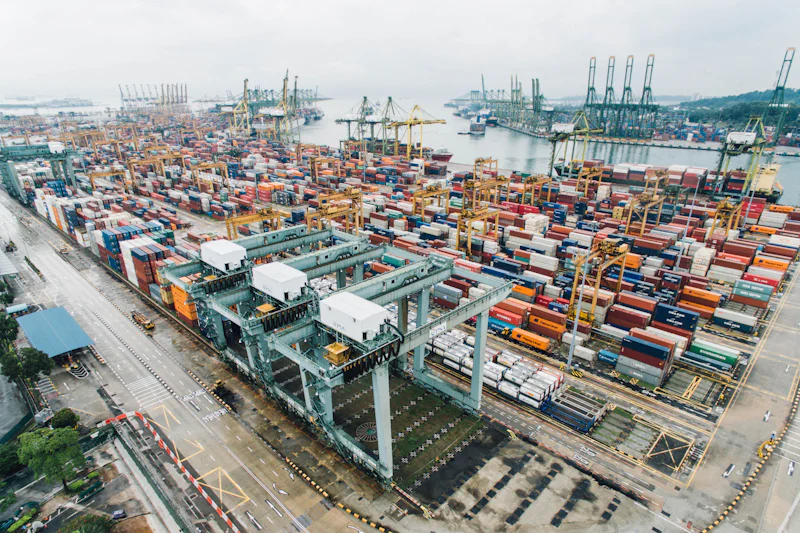
Container and yard vision, gate intelligence, fleet safety, and local analytics in bandwidth-constrained zones.
Illustrative use cases shown for context; no customer deployment, partnership, or operator relationship is implied.
Tell us about the line, the fleet, or the site, and we'll help you define a first pilot around the metric that matters most.
